
Death’s European Tour Without Chuck Schuldiner
What happened in 1990, why Chuck did not travel, what the different accounts say, and how the tour became confused with the Human era in 1992.
Some events in metal history, after decades of retelling, stop being treated as complex human situations and turn into myths. Death’s 1990 European tour — the only documented run of shows performed under the Death name without Chuck Schuldiner while he was alive — is one of them. Tour archive
This article is not written as an indictment or as an attempt to diminish anyone. Chuck remains one of the most important figures in the history of extreme metal. The journalistic responsibility is to separate what can be documented from what has been repeated as rumour, to attribute personal judgements to the people who made them, and to state honestly where certainty ends.
1990The actual year of the European tour with Kreator without Chuck.
25 Oct. – 21 Dec.The documented timeframe of the Torture Over Europe Tour ’90.
4 musiciansButler, Andrews, Carrisalez and Trachsler performed the shows.
1 tourNo second comparable case is documented in 1992.
A Personal Note from 1998
On August 19, 1998, at the age of 17, I had the opportunity to conduct a telephone interview with Chuck Schuldiner for Altars of Metal. Death had just released The Sound of Perseverance, and the conversation focused primarily on the new album, his artistic development and his plans for the future. 1998 archive Audio
When I attempted to ask him about the old European tour with Kreator, Chuck interrupted me before I could complete the question. He was not aggressive, but he made it entirely clear that he did not wish to return to a subject he regarded as old and unrelated to the new music. I respected his decision, and the interview continued.

Altars of Metal:
“When Death toured Europe with Kreator in 1992 — I was interrupted here; the rest of the question was never spoken — you left Death in the middle of the tour. This was an additional motive for your behaviour to be characterized as selfish. Could you explain the reasons why?”
Chuck Schuldiner:
“That’s old news! I don’t really care to talk about that. I don’t know why you would want to talk about it. Honestly, I have no comment on that. It’s old.”
Altars of Metal: “OK…”
Chuck Schuldiner:
“I mean, there’s no reason to talk about it, right? That has nothing to do with the new music.”
Altars of Metal: “OK…”
Chuck Schuldiner:
“I don’t want to offend you, but that’s really so old. I don’t see any reason to tell anyone or talk about it.”
The Difficult Experience of 1989 and the Crisis Before Departure
Chuck’s decision not to take part cannot be examined in isolation from Death’s previous European experience. In a later account, Eric Greif described that earlier tour as exhausting and referred to difficult conditions, inadequate equipment and very limited breaks between shows. This is Greif’s testimony, not an independently established finding. Eric Greif
When the European leg for Spiritual Healing was organised, Chuck expressed serious reservations. In a March 1991 interview, he spoke about personal and professional problems, pressure and a loss of trust in people within the music industry. Chuck, 1991
Terry Butler later presented a different perspective, according to which contractual, financial and organisational commitments were already in place. Because these details come from the personal recollections of those involved, they are presented as testimony rather than as facts established by a court or independent inquiry.
The safest historical assessment is that there was no single cause. The available sources point to a combination of personal exhaustion, distrust of the organisation, contractual pressure and a fundamental disagreement over who held final control of Death.

Chuck Schuldiner
Who Performed Under the Death Name Without Chuck
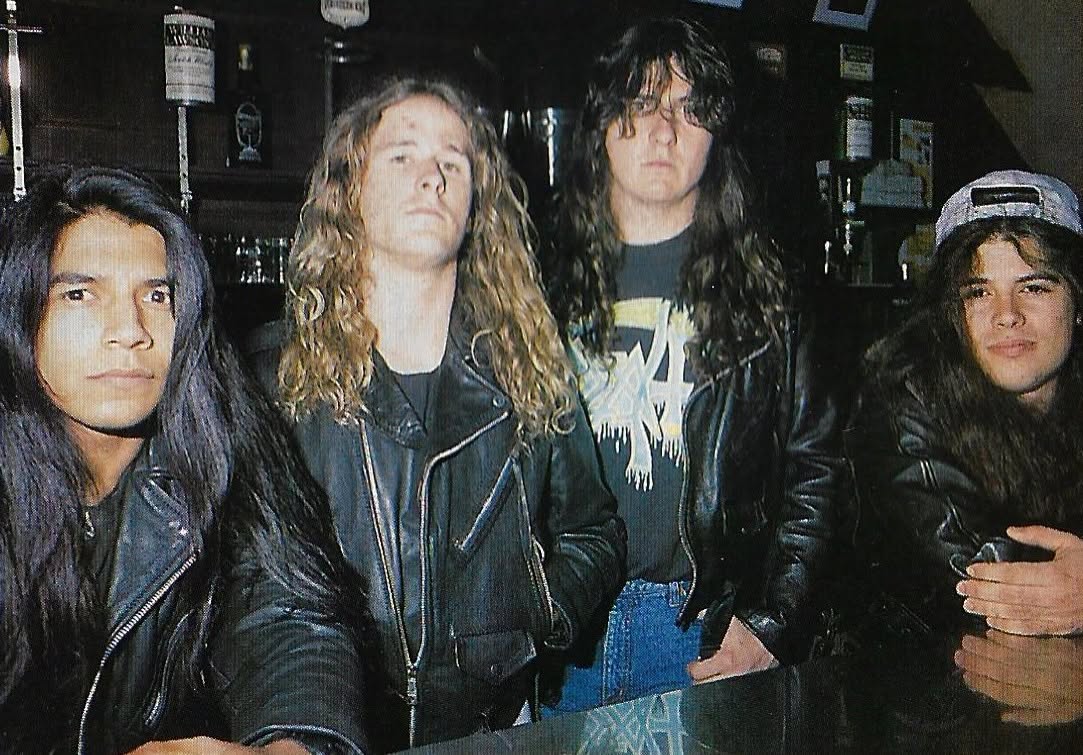
Because Chuck handled both vocals and guitar, two musicians were needed to cover his roles. Terry Butler and Bill Andrews turned to people who were already working around the tour. The line-up and itinerary are documented in archival concert chronologies. Line-up & dates

The 1990 Tour Poster
The official name shown in the surviving archival material is Torture Over Europe Tour ’90. The poster is useful evidence for the Kreator and Death package and for establishing the timeframe of the tour.
The poster itself does not answer the internal questions that led to Chuck’s absence. Those require a combination of itineraries, contemporary interviews and later testimony.
Louie Carrisalez
Vocals
He handled vocals on the tour. In a later interview, he described how he found himself in that position with limited preparation time. Interview
Walter Trachsler
Guitar
He took over the guitar role in Chuck’s absence. He was associated with Rotting Corpse and had worked within the tour’s technical crew. Tour archive
Terry Butler
Bass
A member of Death during the Leprosy and Spiritual Healing periods. Later explanations for the decision to proceed with the tour are personal accounts from those involved and are presented as such.
Bill Andrews
Drums
Death’s drummer on the previous two albums took part in the decision to proceed with the already-booked shows without Chuck’s participation. Greif account
What Can Safely Be Said About the Audience Reaction
The offensive chant referenced by the sources was “F*ck Chuck.” It is not accurate to present it solely as a spontaneous reaction from fans. In the surviving video of Death’s performance in Paris on November 2, 1990, Louie Carrisalez can clearly be heard at 9:17 saying: “F*ck Chuck for not being here. F*ck Chuck!” Paris video • 9:17 This passage is primary audiovisual evidence for that specific performance. It does not, by itself, establish what happened at every date of the tour or justify generalising the conduct to every member or the entire audience.
Encouragement of the Chant Is Also Captured in Primary Audiovisual Evidence
In the Paris performance video, at 9:17, Louie Carrisalez says from the stage: “F*ck Chuck for not being here. F*ck Chuck!” Watch the passage
Chuck stated in 1991 that the other side encouraged the audience to shout the offensive chant. Chuck, 1991
An archival article from the German edition of Rock Hard describes the audience in München-Unterföhring as having been “incited” by the touring line-up around Andrews and Butler. This is the magazine’s wording. Rock Hard
Eric Greif later offered his own critical account of what was being said about Chuck during the tour. The view is explicitly attributed to him. Eric Greif
One Account Cannot Be Generalised Across the Entire Tour
The available reports do not allow us to know exactly what happened at every venue, who spoke before each chant, or how the entire audience reacted in every city.
The Paris video directly documents the quoted statement at that particular show. It does not establish what was said at every other date, and each surviving recording must be assessed separately. Paris • 9:17 Milton Keynes
This article therefore limits itself to the conclusion supported by the sources: the chant cannot reliably be described as an exclusively spontaneous initiative of the audience.
The most careful journalistic wording is that, at least during the Paris performance, the offensive chant was voiced from the stage by Louie Carrisalez, as documented in the video at 9:17. The additional accounts indicate that the episode was not understood solely as a spontaneous audience reaction. It would not, however, be responsible to generalise this specific evidence to every member, every performance or the entire audience.
Video • 9:17
Source 1
Source 2
Source 3
Three Accounts of the Same Rupture
The sources do not agree on every detail. That does not necessarily mean one is entirely true and the others false. They describe different positions within the same conflict.
Chuck Schuldiner
He spoke about personal and professional problems, intense pressure and a lack of trust in the conditions surrounding the tour. He also stated that, after the tour had already been under way for roughly three weeks, he attempted to travel to Europe, but his return to the line-up did not take place. Interview
Terry Butler
Later accounts have emphasised the tour’s organisational and contractual commitments. Because these details do not constitute an independent legal finding, they are presented as the perspective of the touring side rather than as a definitive explanation.
Eric Greif
He linked Chuck’s decision to the previous difficult experiences in Europe, the pressure of self-management and discrepancies that, according to his own account, were identified in the agreements. Account
The Human Tour Was a Different Story
The incorrect year mentioned during the 1998 interview created confusion between two separate touring cycles. Archival itineraries allow them to be clearly distinguished.
With Kreator, Without Chuck
The European tour at the centre of the dispute was performed by Louie Carrisalez, Walter Trachsler, Terry Butler and Bill Andrews. Chuck did not depart with them. Itinerary
The Human Tour with Chuck
During the Human touring cycle, Chuck was part of the line-up as vocalist and guitarist. This was not a second version of the 1990 incident. Tour record
What Happened After the Tour Returned from Europe
After the tour ended, that particular Death line-up ceased to exist. According to Eric Greif’s later account, Terry Butler and Bill Andrews were formally removed, and Greif resumed working with Chuck to plan the next chapter. Greif account
That chapter was Human, which marked the beginning of a new creative period for Death. The rupture of 1990 appears to have reinforced Chuck’s decision to retain final artistic and business control and to work with different musicians from one album and touring cycle to the next. The latter sentence is a historical interpretation based on the band’s subsequent operation, not a recorded statement of intent.
Several retrospectives refer to legal or contractual action concerning the use of the name. Because no complete public legal record is widely available to document every stage and the precise outcome, this article does not offer details that cannot be independently verified.
Respect Does Not Require Erasing History
Chuck Schuldiner does not need to be sanctified for his extraordinary importance to be recognised. His work, development and influence on music speak for themselves. Likewise, presenting a difficult incident should not become a posthumous trial of his character.
In 1990, we see a 23-year-old creator under considerable personal, professional and artistic pressure, who had lost confidence in specific conditions within the music industry and decided not to travel. We also see collaborators who believed commitments were already in place and that the tour had to proceed.
Those different decisions had consequences and led to a final rupture. History is most useful when it helps us understand pressure, mistakes and differing perspectives — not when it is used to manufacture saints and villains.
Primary Accounts, Archives and Further Reading
Personal narratives are presented as testimony. Where the sources disagree, the disagreement is stated. The archival page of the German edition of Rock Hard gives the year as 1991 in its text, while the itineraries place the München-Unterföhring show on December 17, 1990. It is therefore used as a source for its description of the scene, not for dating the tour.
The original published transcript of the telephone interview.
The primary audio record of the conversation.
Chuck discusses the pressure, his decision and his later attempt to travel to Europe.
A primary statement by Chuck concerning encouragement of the offensive chant.
An archival description of the München-Unterföhring show and the audience reaction. The online dating conflicts with the surviving itineraries.
Includes an extensive personal account by Eric Greif concerning the organisation, the rupture and the period that followed.
A detailed itinerary of the European tour from October 25 to December 21, 1990, and of the Human touring cycle.
A historical overview of the transition from Spiritual Healing to Human.
A later personal account of how he came to fill the vocalist position.
Primary audiovisual evidence: at 9:17, Louie Carrisalez can be heard saying, “F*ck Chuck for not being here. F*ck Chuck!”
A complete recording of a show from the same tour.
A collection of archival material. Each recording requires separate verification of the venue and timestamp before it is used to support a specific claim.
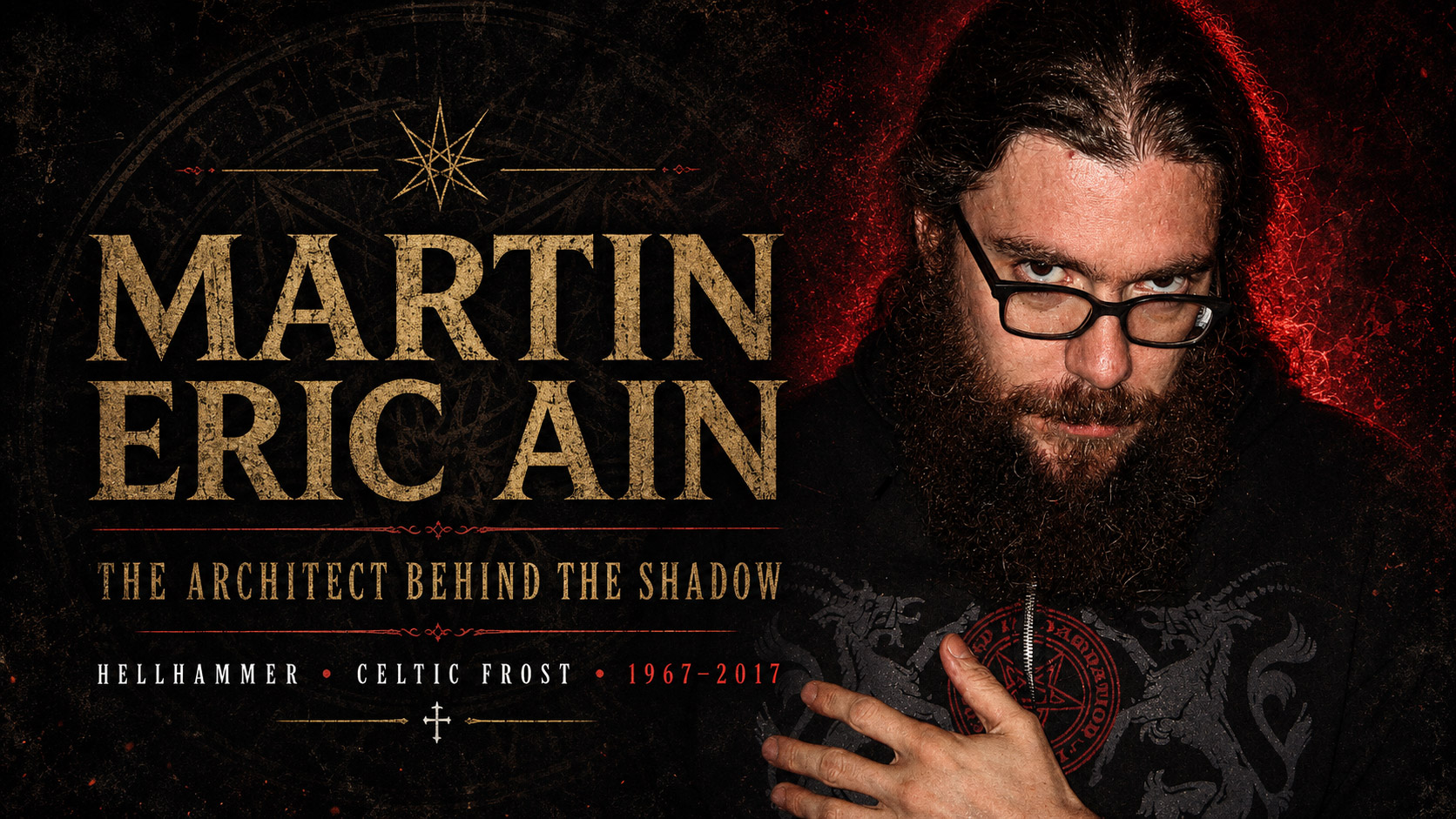
Source and CC BY-SA 3.0 licence for the photograph used in the profile card.
Source and CC BY-SA 3.0 licence for the historical band photograph.
The archival page for the poster used as a historical visual reference.
Frequently Asked Questions
When did the disputed European tour take place?
The European leg with Kreator ran from October 25 to December 21, 1990. Itinerary
Who performed under the Death name without Chuck?
Louie Carrisalez on vocals, Walter Trachsler on guitar, Terry Butler on bass and Bill Andrews on drums.
Why did Chuck Schuldiner not take part?
The available accounts point to a combination of personal and professional pressure, distrust of the tour’s organisation, and disagreements concerning commitments and control of the band. There is no single, universally accepted explanation.
What was the offensive chant, and what is directly documented?
The chant was “F*ck Chuck.” In the Paris performance video, at 9:17, Louie Carrisalez can be heard saying, “F*ck Chuck for not being here. F*ck Chuck!” Video • 9:17 The passage documents that specific moment in Paris; it is not treated as evidence for every performance on the tour.
About the Author: SLATAN

Keep Reading
Related Coverage
Join the Altars
Metal news, exclusive interviews, live reports and new episodes
from Το Καφενείο των Μεταλλάδων — without the noise.